Most no-KYC exchange listicles copy each other — and skip the same things: AML triggers buried three pages into the terms, fund holds documented in reviews, security incidents never mentioned in the headline. So: five exchanges, the actual trade-offs, a table that makes the differences fast to scan.
What Does No-KYC Mean?
No-KYC means no identity documents — passport, selfie, proof of address, none of it. You send crypto, they send crypto back. That's it.
But here's the thing: the label covers a spectrum. Some platforms skip identity by design — structurally, not by policy. Others call themselves no-KYC but trigger checks after the fact via AML risk-scoring. Let's say your swap gets flagged. You've already sent. Now they're holding your funds and asking for documents. That's a KYC exchange. The upfront process was just softer.
And no-KYC is not the same thing as no-AML — the distinction is worth understanding before you pick a platform.
How Do the Best No-KYC Crypto Exchanges Compare?
| Exchange | Account Required | Can KYC Be Triggered After Swap? | Custody During Swap | Data Retention | Signed Proof of Order |
|---|---|---|---|---|---|
| 0trace | No | No | Yes | 72h, user-deletable | PGP-signed |
| Bisq | No | No | No (on-chain escrow) | Local device only | Partial |
| Uniswap | No | No | No (self-custody) | On-chain only | N/A |
| Changelly | No | Yes (AML risk scoring) | Yes | Unspecified | No |
| FixedFloat | No | No (standard swaps) | Yes | Unspecified | No |
The Five Exchanges — Reviewed
0trace
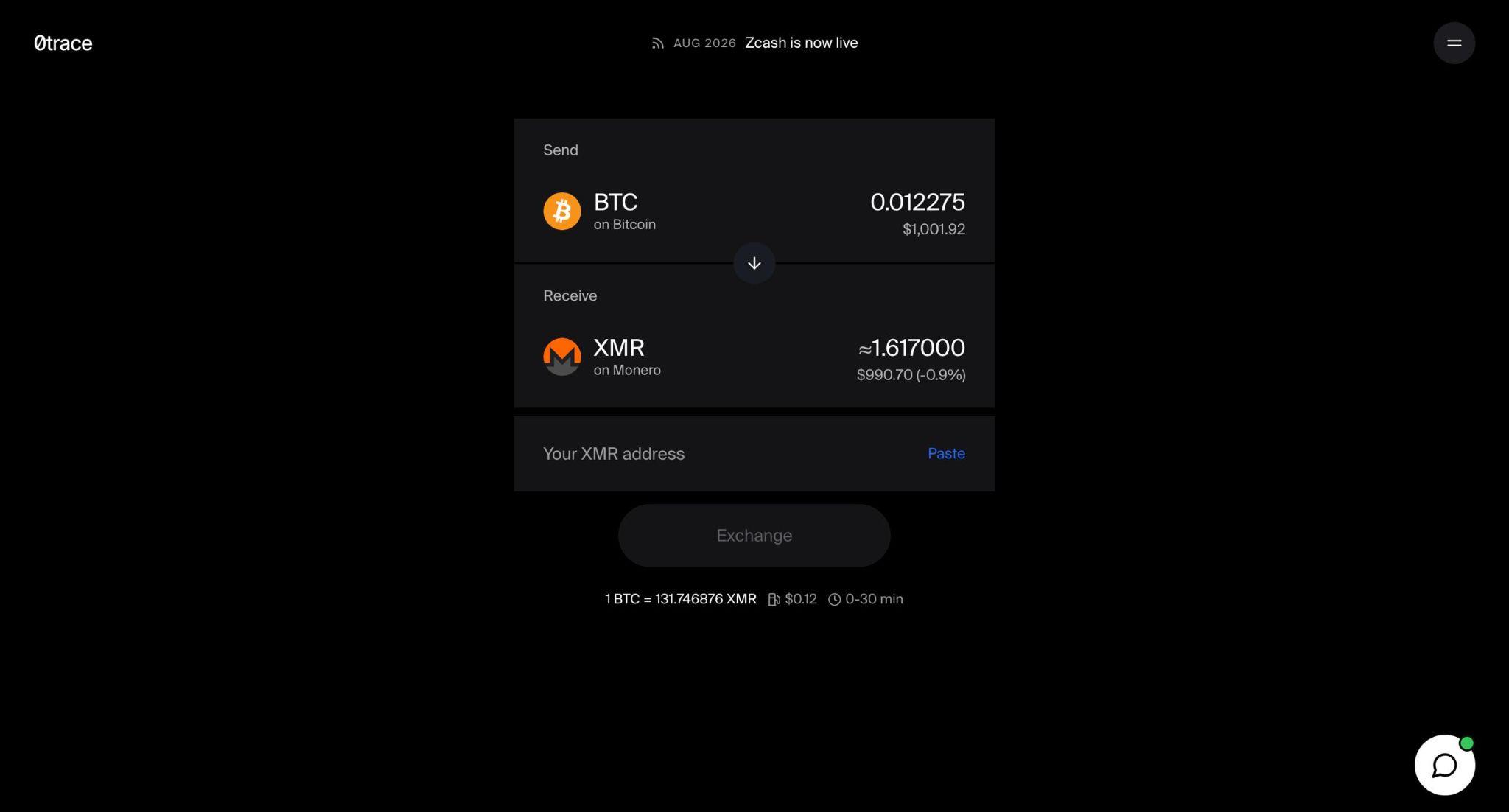
0trace is a no-KYC instant exchange: launched March 2026, 30+ assets across 12 networks, own liquidity reserves, PGP-signed proof on every order. No account. No email. No identity document — ever. AML documentation is never requested from users. That's in the terms, not just the marketing.
The proof system is what separates it. Before you send funds, 0trace issues a signed Guarantee — deposit address, quoted amounts, order terms, locked in writing. After payout, a signed Receipt confirms what executed. Both verify offline with any standard OpenPGP tool. No other service in this comparison does that.
Privacy is built into the architecture: no IP logging, no third-party analytics, a Tor v3 hidden service, and 72-hour data retention users can cut short by deleting the order. Settling from own reserves means the deposit and payout are not linked on-chain.
Pros: No account or KYC under any circumstances; own-reserve liquidity; PGP-signed Guarantee and Receipt; Tor mirror; 72h data retention with early deletion.
Cons: Custodial during the swap window; floating rate — final amount isn't locked until the deposit confirms.
Best for: Private, instant swaps where cryptographic proof of agreed and executed terms matters.
Bisq
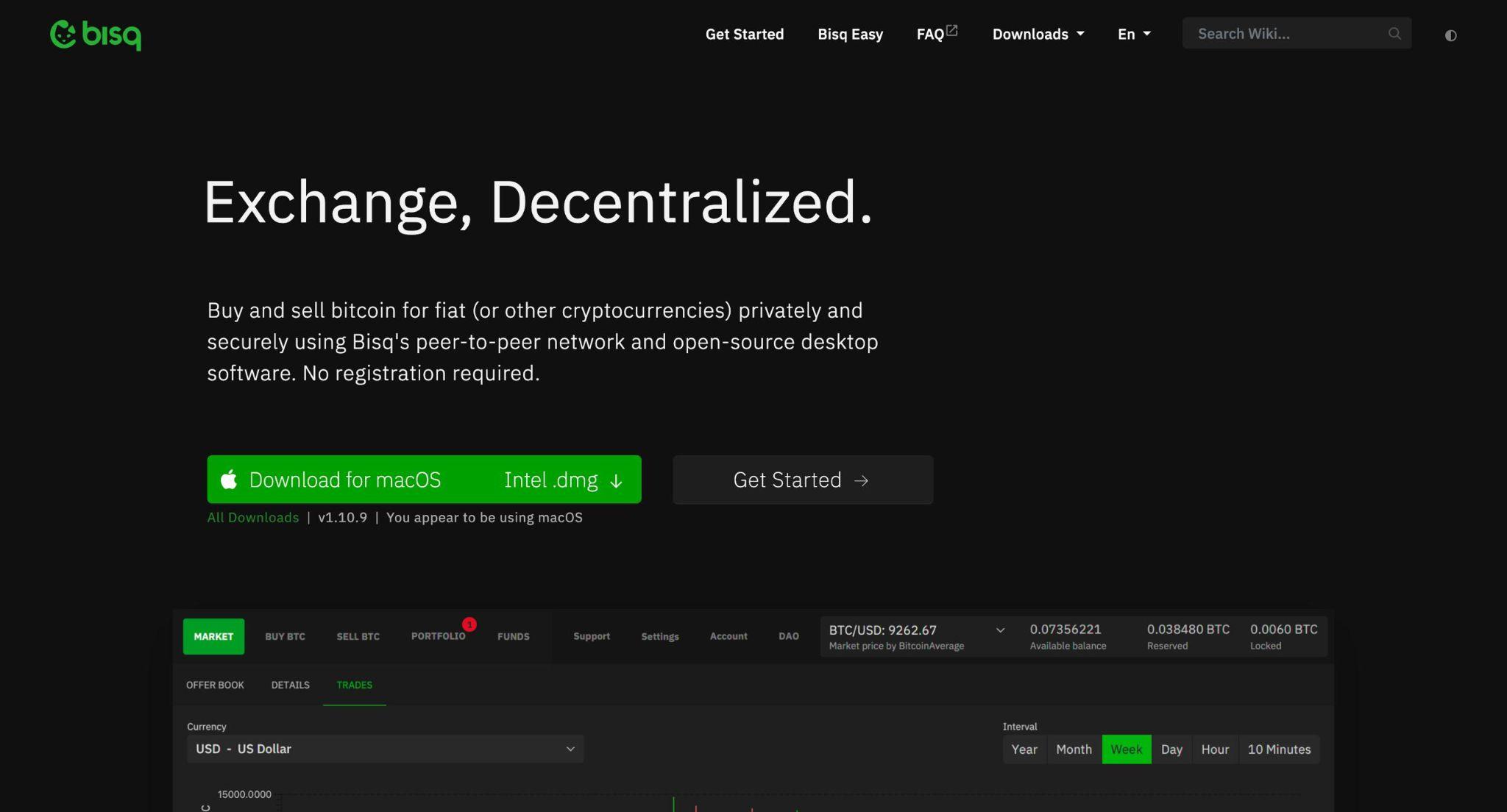
Bisq is an open-source P2P exchange running natively over Tor. Trades settle via on-chain multi-signature escrow between counterparties directly — no company in the middle, no operator to freeze funds or demand ID. The trade-off is speed: order books are thin, matching can take hours, and the platform is Bitcoin-centric with XMR as the main privacy-coin option. Desktop software required.
Pros: Non-custodial; no KYC possible (no central operator); built-in Tor; no regulatory chokepoint.
Cons: Low liquidity; slow settlement; Bitcoin-centric; desktop-only.
Best for: Maximum-privacy Bitcoin trades where non-custodial execution outweighs convenience.
Uniswap
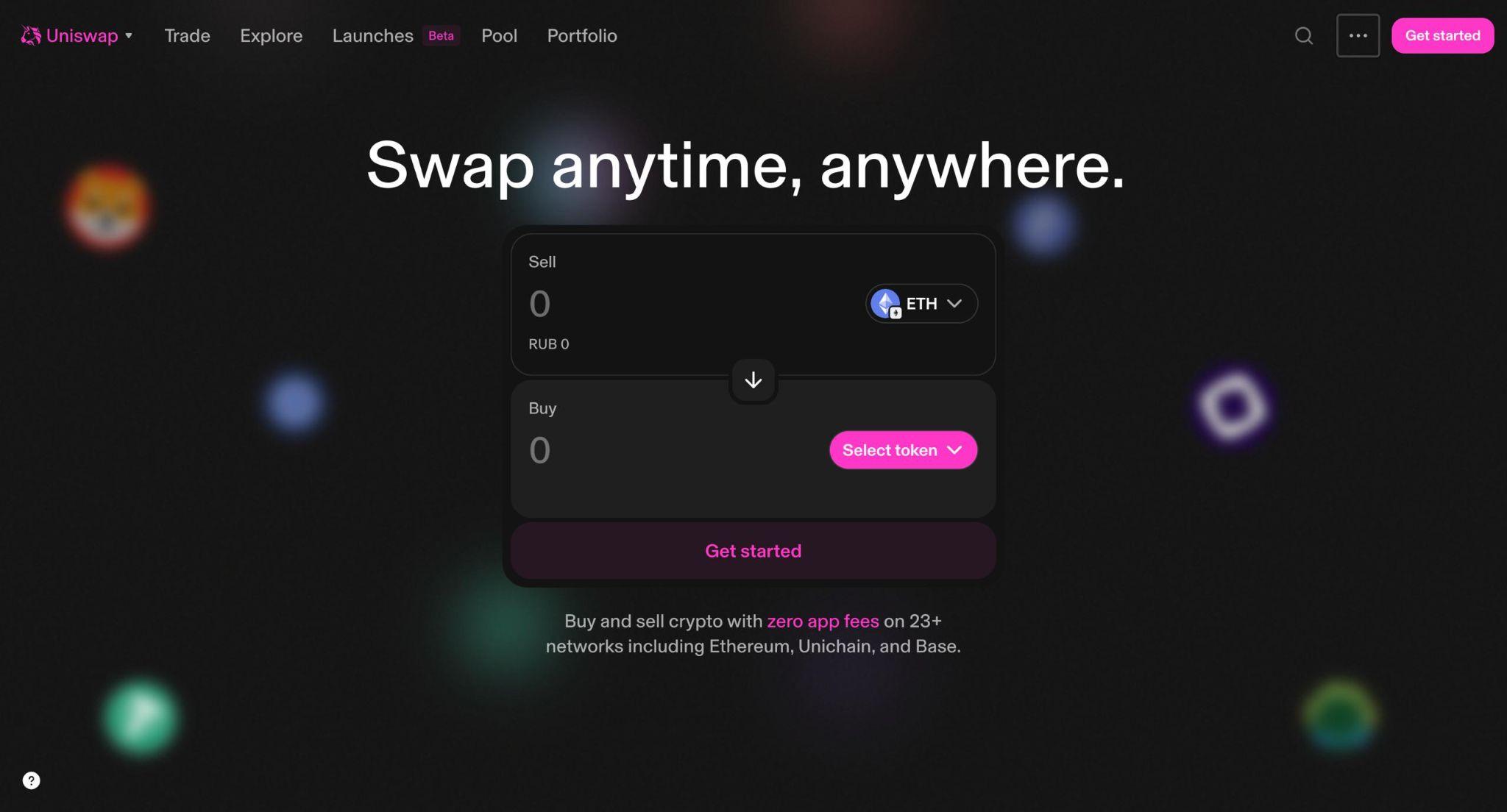
A DEX is a smart-contract trading protocol where swaps execute from your own wallet — no custody, no account, no central counterparty. Full stop. Uniswap is the largest one on Ethereum. KYC is structurally impossible: the contracts have no concept of user identity. Liquidity for ERC-20 pairs on Ethereum and its L2s is deep. But cross-chain swaps and privacy coins sit outside its native reach, and gas fees spike under load.
Pros: Truly non-custodial; no account; deep ERC-20 liquidity; US-accessible.
Cons: Ethereum-centric; high gas fees at peak times; no native privacy-coin support; requires a self-custody wallet.
Best for: ERC-20 token swaps straight from a self-custody wallet.
Changelly
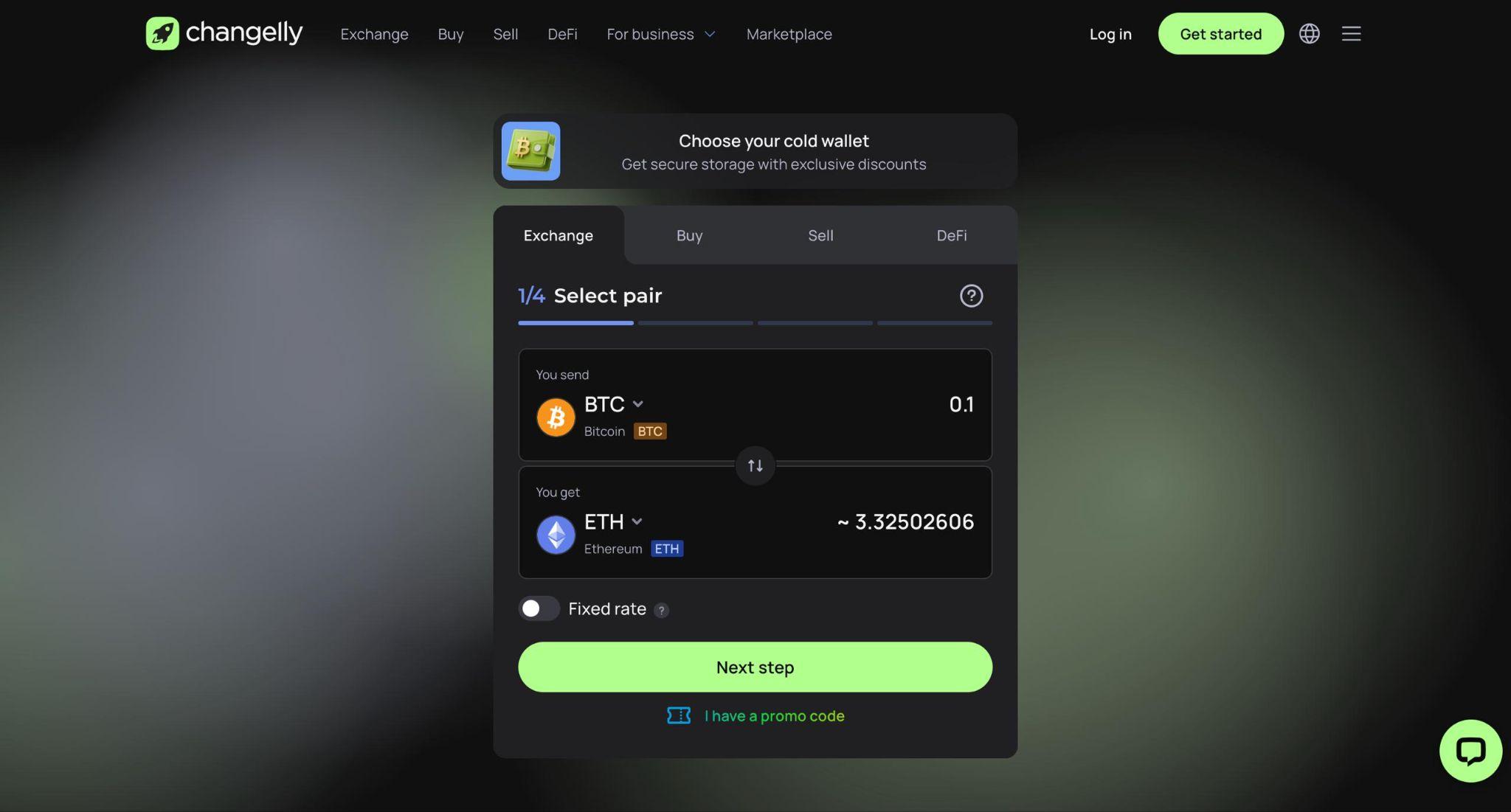
Changelly has run as an instant swap aggregator since 2015 — 1,200+ cryptocurrencies, 200+ blockchains. For clean swaps between well-known assets, it usually works. But here's the thing: Changelly's AML policy explicitly states transactions may be placed on hold for KYC procedures, triggered by its own risk-scoring with no published criteria. Trustpilot reviews from 2025–2026 document fund holds where users had no idea why they were flagged. Either way, the risk is real and documented.
Pros: 1,200+ assets; operating since 2015; integrated into Trezor and other wallet swap flows.
Cons: Post-swap KYC and fund holds documented; no signed order proof; custodial.
Best for: Broad asset coverage when users accept the conditional KYC risk.
FixedFloat
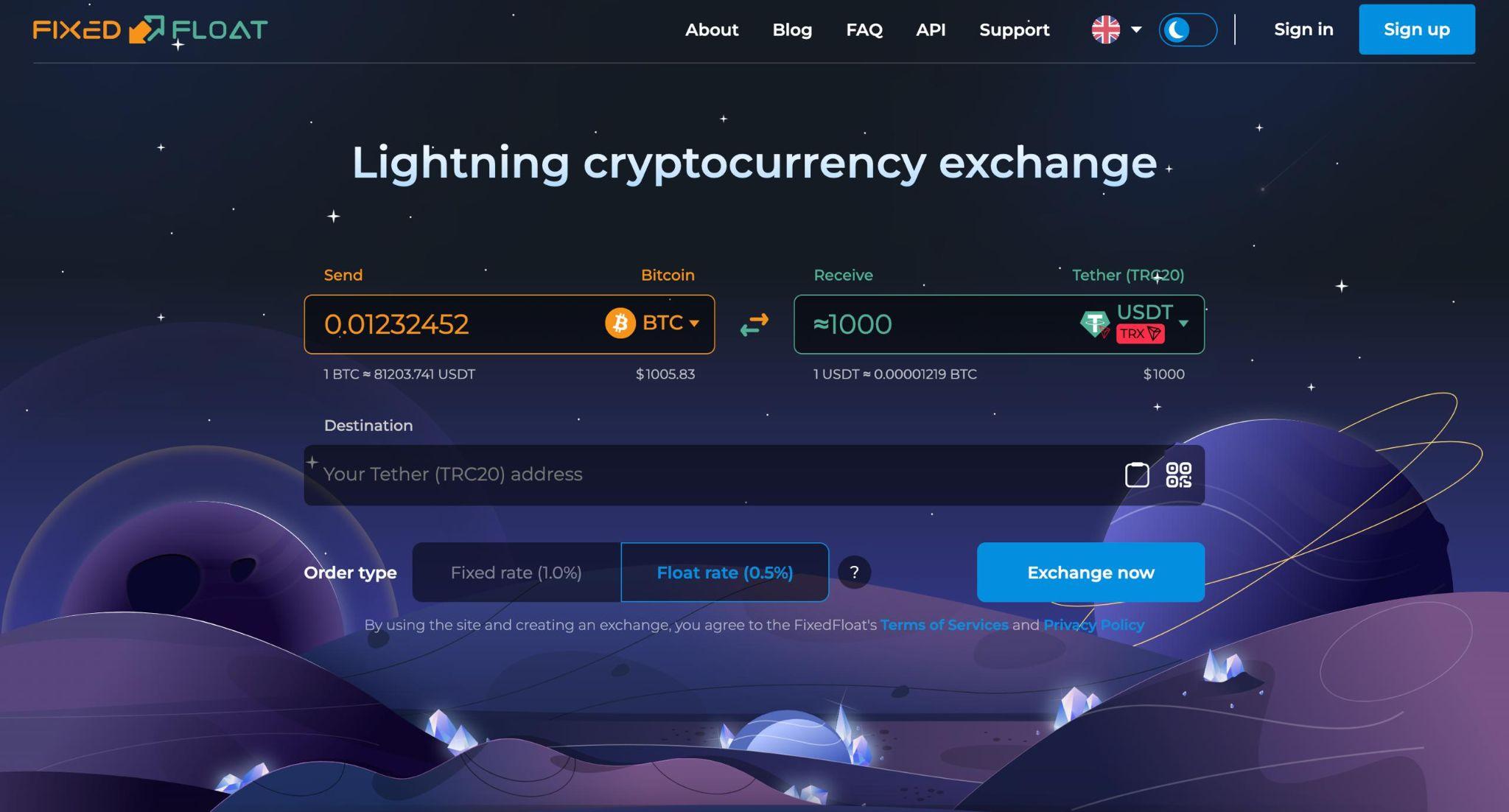
FixedFloat has run no-registration swaps since 2018 across over a hundred assets. The differentiator is Lightning Network support for Bitcoin — LN settlements complete in seconds, not block confirmations. No account, no email. And: two security incidents in early 2024 drained user funds. FixedFloat addressed both publicly. No further incidents since.
Pros: No registration or email required; Lightning Network BTC support; fast LN settlements; partner API.
Cons: 2024 security breaches on record; over a hundred assets is narrower than most competitors; no signed order proof.
Best for: Fast Lightning Network Bitcoin swaps without an account.
What "No-KYC" Doesn't Protect You From
Skipping identity verification removes one exposure. It doesn't remove the others.
On-chain visibility. Most blockchains are public ledgers. Anyone with your deposit address can trace the transaction forward and backward. The exchange collects nothing — but the chain records everything. Monero is the exception: its transaction graph is private at the protocol level. Bitcoin, Ethereum, and most others are not.
Tax liability. A no-KYC exchange doesn't report you. But crypto-to-crypto swaps are taxable events in most jurisdictions, and the on-chain record exists whether or not anyone is looking at it now. Track your own transactions.
Geo-restrictions. Regulatory pressure shifts fast. A platform accessible today may block your country tomorrow — sometimes with little notice. Check current restrictions before you rely on any service for recurring use.
Custodial risk during execution. Instant swap services briefly hold your deposit while the swap executes. That window is short, but it exists. Non-custodial alternatives like Bisq or Uniswap eliminate it entirely — at the cost of speed and asset range.
So: no-KYC narrows the surface area. It doesn't eliminate it.
Bottom Line
No-KYC is not a binary — and most people find that out the hard way, after a fund hold. The safer filter: does the service commit in its terms, not just its marketing? And does it back every order with cryptographic proof you can verify without contacting anyone? 0trace answers both questions. That's the bar worth holding other platforms to.
Pick based on what you actually need — and keep your own transaction records. None of this is financial advice.


